Argon Plasma Coagulation (APC) · Endoscopic Reference
First-line endoscopic thermal therapy for gastrointestinal angiectasia — mechanism, indications, efficacy, and post-procedure expectations.
Overview
Argon Plasma Coagulation (APC) is the first-line endoscopic treatment for angiectasia (or vascular ectasia) in the gastrointestinal tract. This thermal technique allows the sealing of dilated and fragile blood vessels without the device touching the tissue directly, significantly reducing the risk of bleeding and chronic anemia. [1][2][3]
How does the procedure work?
The procedure is generally performed under sedation during an upper digestive endoscopy or colonoscopy:
- Non-contact principle: A thin probe is passed through the working channel of the endoscope. It releases a high-frequency electrical current conducted by a flow of ionized argon gas (argon plasma).[1][2][3]
- Superficial thermal effect: The plasma jet "jumps" from the tip of the probe to the injured tissue. The heat generated cauterizes and coagulates the blood vessels of the mucosa.[1][2][3]
- Increased safety: As the thermal penetration depth is very limited (about 0.5 to 3 mm), the risk of organ perforation is much lower compared to lasers or direct-contact electrocoagulation.[1][2]
Main indications
The APC technique is widely used to treat:
- Angiodysplasias / Angiectasias: Small vascular malformations that can appear anywhere in the digestive tract (common in the colon and small intestine).[1][2]
- GAVE (Gastric Antral Vascular Ectasia): Also known as "watermelon stomach", a condition in which the vessels of the gastric antrum dilate in a linear pattern.[1][2]
- Radiation proctitis: Chronic vascular lesions in the rectum that frequently arise after pelvic radiotherapy treatments.[1][2]
Advantages and efficacy
- Reduction of transfusions: The treatment demonstrates excellent efficacy in stopping occult or active blood loss, improving hemoglobin levels in the long term and drastically reducing the need for blood transfusions.
- Rapid treatment: It allows large areas to be covered or multiple lesions to be treated quickly in the same session.[1][2][3][4]
What to expect after the procedure?
The procedure usually lasts 15 to 30 minutes longer than a normal endoscopy. After waking up from sedation, it is normal to feel a slight sensation of bloating, gas, or cramping, since the accumulated argon gas is not absorbed quickly by the body. Serious complications, such as severe abdominal pain, fever, or delayed bleeding, are rare, but require immediate medical contact.
Often, depending on the extent of the angiectasias, 2 to 4 spaced sessions may be necessary to completely eradicate the lesions.[1][2][3][4]
Video references
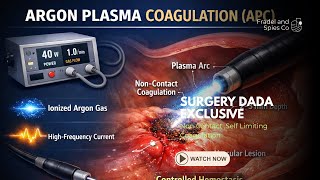 Argon Plasma Coagulation (APC) Explained | Know Your Instrument Series | Live Tissue Demonstration
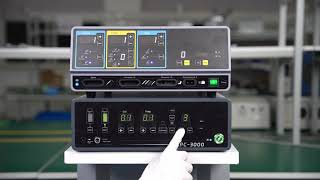 APC-3000 Argon plasma coagulation demonstration
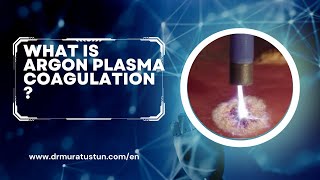 Argon Plasma Coagulation (APC)
 Argon Plasma Coagulation (APC) | Principles, Indications & Clinical Applications
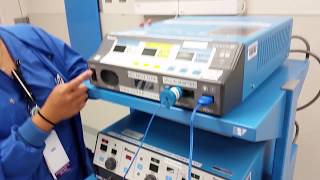 Argon Gas Coagulator (Argon Laser) Set Up
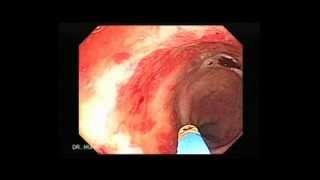 Treatment of Radiation Proctitis with Argon Plasma Coagulation
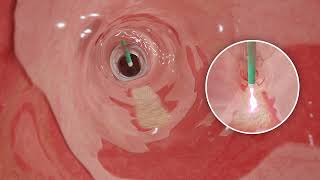 ArgoCap® | APC from a new angle
 Cyclodialysis Cleft Argon Laser Photocoagulation
 Focused learning on Electrocautery and Argon plasma coagulation (APC) | AIG Hospitals
 Factors That Contribute to Blood Loss in Patients With Colonic Angiodysplasia From...
 Dr. Justin Miller - Why I Use Argon Beam Coagulation (ABC® Technology) - Surgeon Testimonial
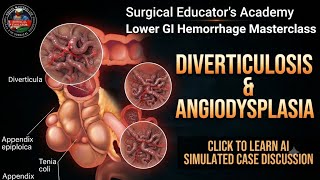 Diverticulosis & Angiodysplasia- AI Simulated Case Discussion- Lower GI Hemorrhage
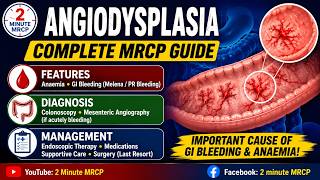 Angiodysplasia | Features, Diagnosis & Management | GI Bleeding | 2 Minute MRCP